


Explore How Montessori Is Different from Traditional Early Education
Child-centered, individualized approach emphasizes hands-on, self-paced learning within mixed-age classrooms in a beautiful, soothing environment that encourages concentration rather than stimulation so children can flourish.
Montessori Principles

Dr. Maria Montessori (1870-1952) was one of the first women physicians in Italy. Her work led her to closely observe the behavior of children. The principles that follow are based on Maria Montessori’s writings and observations and have been adopted by the American Montessori Society (AMS) as key concepts in preparing children for life in the 21st century. The aim of Montessori education is to foster autonomy, competence, and agency and to develop responsible, adaptive citizens who are lifelong learners, compassionate toward others, problem identifiers, and problem solvers.
- Montessori classrooms are environments where learning occurs in an inquisitive, cooperative, nurturing atmosphere. Children increase their own knowledge by engaging in child-directed work, using a combination of self-correcting material, exploration, collaboration, and teacher-initiated experiences. A Montessori classroom is less teacher-centric than a traditional classroom.
- Montessori environments enable learning to take place through the senses. Children learn through manipulating materials and interacting with others. These meaningful experiences are precursors to the abstract understanding of ideas. Hands-on materials in a classroom are designed to attract the child, stimulate academic exploration, and develop critical thinking.
- Classrooms are multi-age by design. The infants are 3 months to 18 months old. Toddlers are 18 months to 36 months. Early childhood is from 3 years to 6 years. Self-initiative, collaboration, compassion, and problem-solving skills, along with a “growth mindset,” are practiced in a safe, supportive, and healthy atmosphere with mixed-age children of varying levels of skills and experience to help support learning without judgment and an acceptance of diversity and learning styles.
- The individual is considered as a whole. The physical, emotional, social, aesthetic, and cognitive needs are all considered essential to the developing human.
- The child learns respect for self, others, the environment, and life, all as a necessary expression of developing a caring attitude toward all people and the planet.
Come See the Montessori Difference
You can see the differences in the Montessori approach to the whole child in our classrooms, on the playground, during meals, and even at home, as children care for themselves, for each other, and for the world around them. Every classroom has been intentionally designed to support child-directed learning through freedom of movement, freedom of choice, the development of independence, and a growing awareness of others in the community. The beauty and simplicity of the classroom materials and furnishings, combined with the overall design of Montessori Children’s Center, make this a welcoming, peaceful environment for children to explore, learn, connect, and grow.
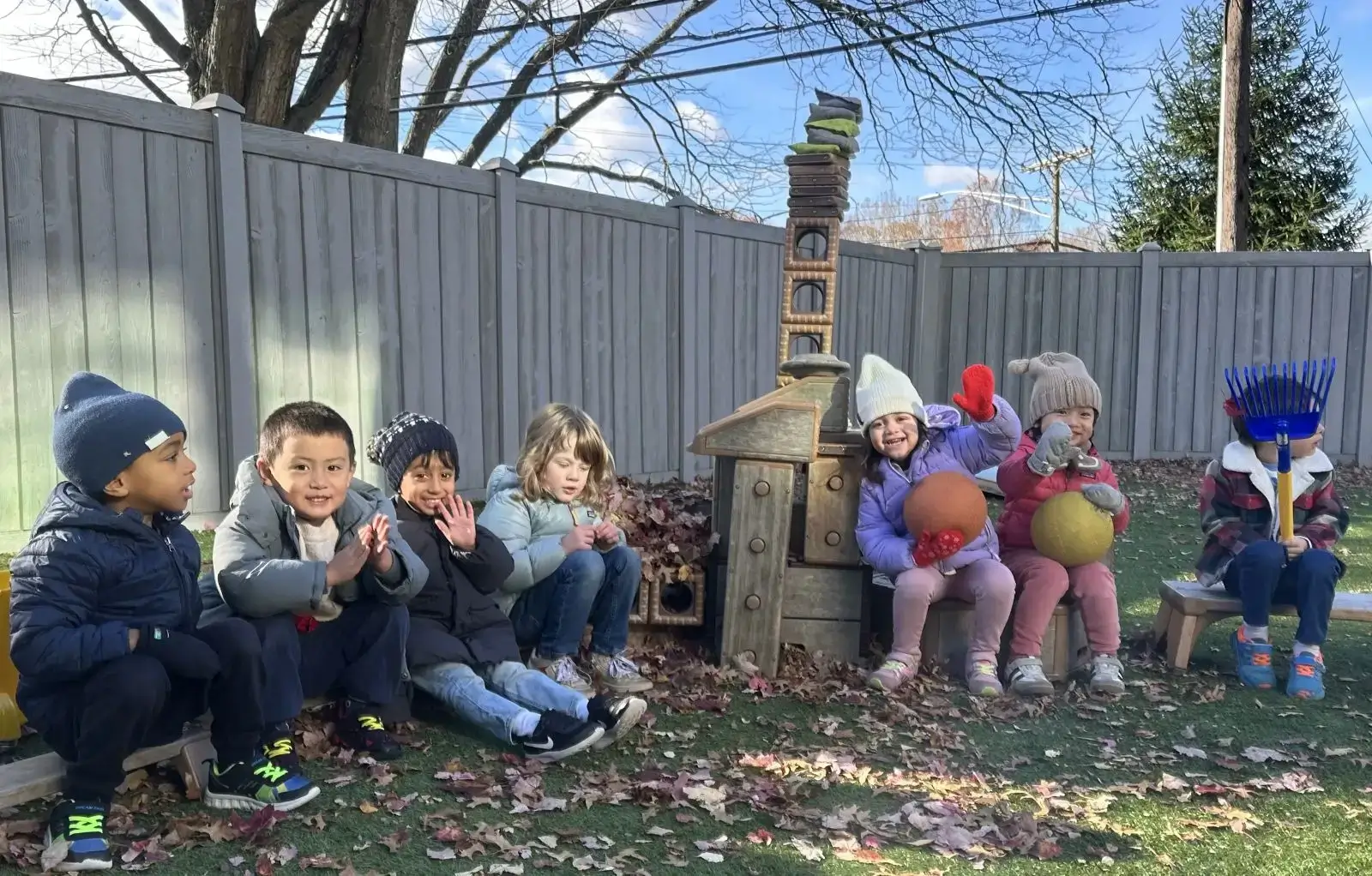
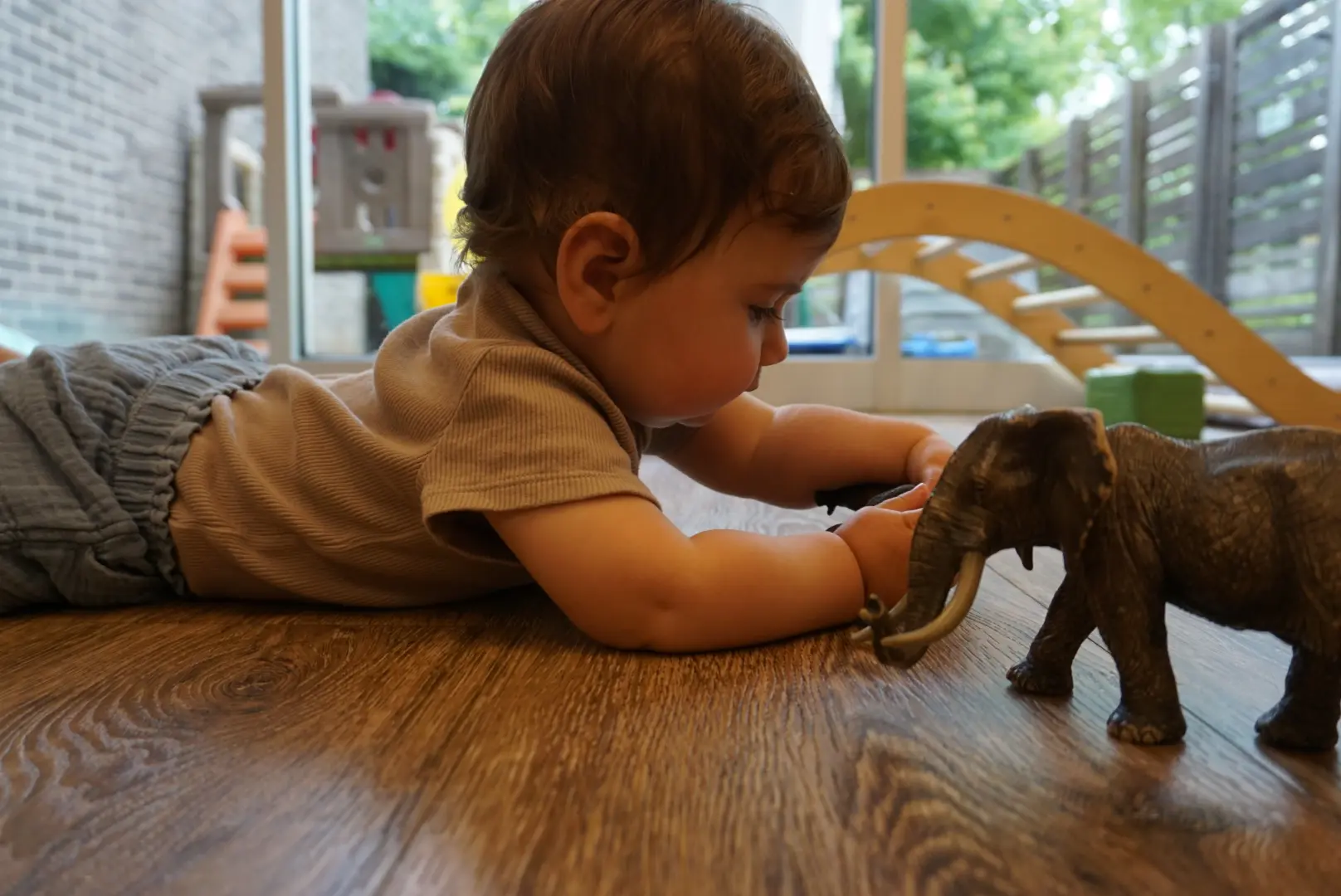
From the moment they enter MCC, even if they arrive at the very young age of 3 months, to the time they leave us when they head off to Kindergarten, the children experience the gift of time to develop at their own pace and explore the rich, nurturing environments we have carefully prepared for them.
Even from the youngest age, children experience the joy and delight of discovery. As they mature and develop, our programs move along with them. Developing the qualities of agency, empathy, self-discipline, and independence are essential aspects of Montessori education, and we work each day to assist the children in our care to move toward those goals.
Bringing Montessori Home
We hope you will see the value in having children practice their skills at home. We ask parents to practice the concepts of freedom within limits and encourage children to be independent and do as much as possible that they are capable of, including walking to and from MCC once they can walk, and take responsibilities at home: choosing their own clothes, setting the table, helping with laundry, unloading the car, working in the garden, watering plants, feeding pets, etc., thus participating and supporting their life at home as active contributors to their community from a very young age.

Daily Schedules
Infant Cove & Infant Sea
Montessori Children’s Center Daily Schedule for Infants - (3 to 18 months) Room
Diapering occurs whenever the child is soiled or wet. Parents provide diapers, wipes, creams, lotions, or pastes. Infants who can stand are diapered standing in front of a mirror with the infant assisting by getting their own diaper, opening the tab of the diaper, and helping to undress and dress themselves. We use factual terms when describing the toileting process while we change the infants to show our respect for the child. Sleeping and feeding times are based on each individual infant’s schedule and readiness. Infants wash their hands after toileting, coming in from outside, before eating, or whenever soiled. Infants go outside twice a day and will go out in most weather if parents provide gear. The Peace Room is also available if weather or air quality prevents outdoor play. Caregivers ensure the required ratio of 1:4 at all times. Parents are required to check their child in and out of the ProCare system to enter.
8:00-9:30 - Arrival
Infants arrive individually and are greeted warmly and given a daily health check. Children change at their cubby into their inside shoes with assistance in developing independence in taking off their coat, changing shoes, hanging bags, and putting on outdoor attire in their designated cubby. Children wash their hands upon arrival. Children are offered breakfast. Infants begin to explore the environment with self-chosen activities.
9:00-11:30 AM - Self-chosen Activities, Outside, and Morning Nap
Infants enjoy a variety of self-chosen materials and activities in the environment or outside on the infant terrace. Some children begin their first nap. Each infant follows their own schedule of napping, bottle feeding, floor play, tummy time, and interactions with other children and materials. Instrumental music or nature sounds may be played. Children flow between the inside and outside areas. Materials are always available and include a varied assortment of practical life, gross motor activities, sensory experiences, manipulatives, books, blocks, and heavy work. In the event of inclement weather, infants enjoy the Peace Room. Adults ensure the group remains in ratio at all times.
11:30-12:00 PM - Lunch
Children who are eating food enjoy a nutritious lunch. Children sit at a low table, family style. Once they are able, they are encouraged and coached to independently use utensils and open cups rather than sippy or straw cups. When finished, the child washes their hands. Diapers are checked. Bottles are heated in a bottle warmer (which does not exceed 180°F) and are always temperature tested before serving. Infants are encouraged to self-feed by holding their own bottle if able.
12:00-3:00 PM - Naptime
An infant’s individual sleep schedule determines their napping schedule throughout the day. Those children who take one nap per day have their nap. Awake children enjoy quiet activities with the caregiver. Infants sleep in low beds with sheets and one sleep aid (lovey) provided from home. The bedding is sent home weekly to be washed on Fridays or whenever soiled. Beds are not shared and are cleaned on Fridays.
1:30-2:30 PM - Self-Chosen Activities and Outside
Infants begin to awaken and are encouraged to choose work. They may go outside on the terrace or on a walk with a caregiver to the Montessori Children’s Center park. Infants fall asleep and awaken on their own schedule. They are never woken up by caregivers but are allowed to sleep as long as they need. As they awaken, the older infants assist with putting away their bedding in their cubby.
3:00-3:15 PM - Snack
A nutritious snack is provided by Montessori Children’s Center or parents. Infants sit on low chairs around the low table and enjoy snacks family style.
3:15-5:00 PM - Activities
Each infant chooses work and organically explores the prepared environment. Group activities such as music, singing, bubbles, and reading may occur. Children are toileted and prepared for dismissal according to their family’s pick-up schedule.
5:00-5:30 PM - Dismissal
Children are toileted and prepared for dismissal according to their family’s pick-up schedule. 5:30 is the final dismissal. Parents receive a daily sheet updating them on the child’s sleep, eating, and toileting, as well as activities enjoyed and any items needing replacement.
All children and families must exit the building by 5:30.
Toddler Sand, Toddler Sky, & Toddler Sun
Montessori Children’s Center Daily Schedule for Toddlers - (18 to 36 months)
Diapering occurs whenever a child is soiled or wet. Parents provide diapers, wipes, and any creams, lotions, or pastes. Toddlers are diapered standing in front of a mirror, with the toddler assisting by getting their own diaper, opening the tab of the diaper, and helping to undress and dress themselves. We use factual terms when describing the toileting process while we change the toddler to show our respect for the child. The toddler is offered the option to use the toilet or potty. As toddlers become more toilet independent, they move away from diapers and use underwear (rather than pull-ups). Toddlers go outside twice a day and will go out in most weather if parents provide gear. The Peace Room is available if weather or air quality prevents outdoor play. Caregivers ensure the required ratio of 1:5 at all times. Parents are required to check their child in and out of the ProCare system to enter the building. Walking children are encouraged to walk to and from the Montessori Children’s Center building (rather than being carried) to assist in supporting independence.
8:00-9:30 AM - Arrival
Toddlers arrive individually and are greeted warmly, talked to, changed (if necessary), and given breakfast. Toddlers are each given a daily health check and are assisted to change into their inside shoes until they are able to change shoes independently. Toddlers remove their outdoor gear with assistance and will begin to hang it up as they become more independent.
8:00-10:30 AM - Self-Chosen Activities
Toddlers begin to explore the environment with self-chosen activities. They may work independently, with a teacher, or with a friend. Materials include a varied assortment of practical life, fine motor, gross motor, language activities, sensory experiences, manipulatives, and books. Toddlers are encouraged to be independent in their exploration of the environment, and a helpful adult is always present to assist. A food-tasting activity may occur during this time.
10:30-10:45 AM - Music and Movement
Children may choose to join a group led by the head teacher and enjoy a story, music, movement, or finger play in joyful group activities.
10:45-11:00 AM - Morning Snack
Toddlers share a nutritious snack family style and use language to talk about color, shape, taste, and texture. They smell and touch the food, using all their senses.
11:00-11:45 AM - Outdoor Activity
Children transition to their outside shoes and outdoor gear and then enjoy unstructured outside play on the Montessori Children’s Center park or terrace, supervised by staff. An assortment of large wooden blocks, scooters, see-saws, and balls are available, as well as a toddler-appropriate climbing structure with a climbing wall, steps, and slide.
12:00-12:40 PM - Lunch
Lunch is served family style, with children encouraged to independently use utensils and drink from open cups rather than sippy cups or straw cups. The children are assisted in serving themselves, and if their lunch is lunch supplied by their parent, the child will assist in transferring their meal to a plate or bowl, even if it is pouch food, so the child can use a utensil. Any leftovers of parent-supplied food are sent home. After finishing, the child carries their dish to the low basin and washes their bowl and plate.
12:45-3:15 PM - Nap and Rest
Toddlers sleep in low cots with sheets and lovies provided from home. The bedding is sent home weekly to be washed on Fridays or whenever soiled. Cots are thoroughly cleaned weekly on Fridays. Cots are assigned and not shared, and are placed two feet apart from each other. Teachers assist toddlers in falling asleep by rubbing or patting if needed. They are never woken up by caregivers but are allowed to sleep as long as they need. As they awaken, the toddlers assist with putting away their bedding in their cubby.
3:15-3:45 PM - Snack
Toddlers enjoy a second nutritious snack as they awaken.
3:45-4:30 PM - Outdoor Activity
Children play outside on the Montessori Children’s Center park, terrace, or Peace Room, supervised by staff.
4:30-5:30 PM - Self-Chosen Activities
Toddlers choose activities to engage in and explore. Group activities such as music, sound lotto, singing, bubbles, or reading occur.
3:30-5:30 PM - Dismissal
Children are toileted and prepared for dismissal according to their family’s pick-up schedule. Final dismissal is at 5:30. Parents receive a daily sheet with the child’s sleep, eating, and toileting that day, as well as activities enjoyed and any items needing replacement. All children and families must exit the building by 5:30 pm.
The MCC Toddler program has been on the forefront of creating safe, responsive, and nurturing environments that meet the development needs of the toddler age group for curiosity and independence.
Numerous studies have documented a correlation between physical development and cognitive development. Our beautiful, sunlit, and spacious environments are custom designed for toddlers, enabling a safe, inviting geography to assist children as they fulfill their tasks of trust, separation, independence, and developing self-control.
In the MCC environment, the toddler develops feelings of support, security, and strong self-esteem. The carefully prepared class environment beckons the toddler’s strongest desires to make order out of chaos, to move with intention and coordination, and to communicate with others. The curriculum and materials help the toddler respond to the rapid and conflicting changes of this developmental age.
Children are guided toward appropriate behaviors in a non-judgmental atmosphere that offers consistency with a balance between freedom and limits. The comfort, reassurance, and aid of a caring adult is always available to the toddler.
Toddlerhood is in a time of natural curiosity. Exploration for our toddlers is celebrated, and the toddler is encouraged to become a functioning, independent member of the community of the classroom. Activities are positioned artfully around the room for toddlers to choose independently. They have freedom of movement to explore, and each is given the time needed to complete what they start. Each activity deals with a particular theme, skill, or subject of particular value to toddler development. These activities enable toddlers to begin to experience concepts of sequence, form, shape, movement, number, and sound. The activities change and evolve as the child grows physically, emotionally, and intellectually.
Toddlers enjoy learning life skills. Activities, which up until now have been going on around them to help or assist them can now be done by themselves, and are irresistible: getting dressed, preparing lunch, setting the table, sweeping the floor, serving their own food, etc. Being able to finish a task on their own creates a surge of pride at this age.
When you compare the MCC toddler rooms with traditional toddler programs, you’ll notice many differences. The room is designed to be soothing, rather than stimulating. The stimulation comes from the materials and the different areas of the room, rather than colorful, brightly colored walls or furnishings in primary colors. The furniture is natural and comforting. The space is well-organized and uncluttered. There is art hung on the walls at the toddler’s sight level. Real materials are used rather than pretend. The children eat on plates, drink from open cups, and use small toddler-size utensils. They have a real, child size tools to use, rather than plastic pretend. Just as they would if they were at home, the children actively participate in the day-to-day functioning of the class: watering plants, setting a table, setting out their bedding on the cot, all while making a real contribution to assisting the life of the room.
Between eighteen months and age two, there tends to be an explosion into spoken language, with young children learning new words every day. As they learn to speak in phrases, toddlers begin to add the other parts of speech. Researchers estimate that many children have learned seventy percent of the vocabulary they will use as adults by age three. The toddler environment is rich in language materials such as books, objects, and picture cards, as well as numerous activities devoted toward language development that include all the senses, such as food tasting and sound games. The vocabulary of objects, activity, and feelings pervades every aspect of our program.
Close communications between parents and teachers is a hallmark of our program. Parents know best their child’s routine, personality, and unique qualities. Our special phase-in process helps to ensure the new toddler feels secure during this important transition. We strive to maintain a constant dialogue and close relationship with every child’s family though daily conversation, daily reports, and regularly scheduled conferences. The Head Teacher and Director are available to meet or talk with parents regarding any issue or concern.
Our Head teachers are MACTE certified Infant and Toddler Montessori professionals or in the process of receiving their training for their Montessori teaching credential to ensure a dedicated Montessori toddler environment where parents feel positive and secure about their child’s early experience. Our teachers provide the respect, tenderness, warmth, consistency, and patience that allows each toddler to blossom and flourish.
Early Childhood Meadow & Early Childhood Mountain
Montessori Children’s Center Daily Schedule for Early Childhood - (36 months to 6 years)
All EC children are no longer in diapers, including during nap. Toileting occurs individually. Children wash their hands after toileting, coming in from outside, before eating, after blowing their noses, or whenever they are soiled. Meadowlarks and Mountaineers go outside twice a day and will go out in most weather as long as parents provide gear. The Peace Room is also available in the event that weather or air quality prevents outdoor play. Caregivers ensure the required ratio at all times. Parents are required to check their child in and out of the ProCare system in order to gain entry into the building. Children are encouraged to walk to and from the Montessori Children’s Center building (rather than being carried) to assist in supporting independence. During the day at Montessori Children’s Center, children work individually or with friends and find purpose and joy through meaningful actions, taking responsibility, assisting others, being in community, and the discovery of new ideas, skills, connections, and abilities.
8:00-9:30 AM - Arrival
Children arrive individually, are greeted warmly, and are given a daily health check. They remove their outside shoes and gear and put on their inside shoes. Breakfast and morning snack are available for children to help themselves and enjoy at the 2-person snack table until 10:00 am. Children are encouraged to wash dishes afterward.
8:00-11:00 AM -Self-Chosen Work
The children choose work and activities, and engage with materials individually or with friends, or have a presentation from a teacher. Older children have work folders to collect their completed work. Children move freely about the room and may choose to work on a rug on the floor or at a table. The Montessori curriculum is both broad and deep and offers a wide assortment of practical life, gross motor activities, sensory experiences, manipulatives, language, reading and writing activities, math activities, geography, culture, books, and art based on the child’s interest and level. Seasonal art projects and food preparation may be available.
11:00-11:15 AM - Community Circle
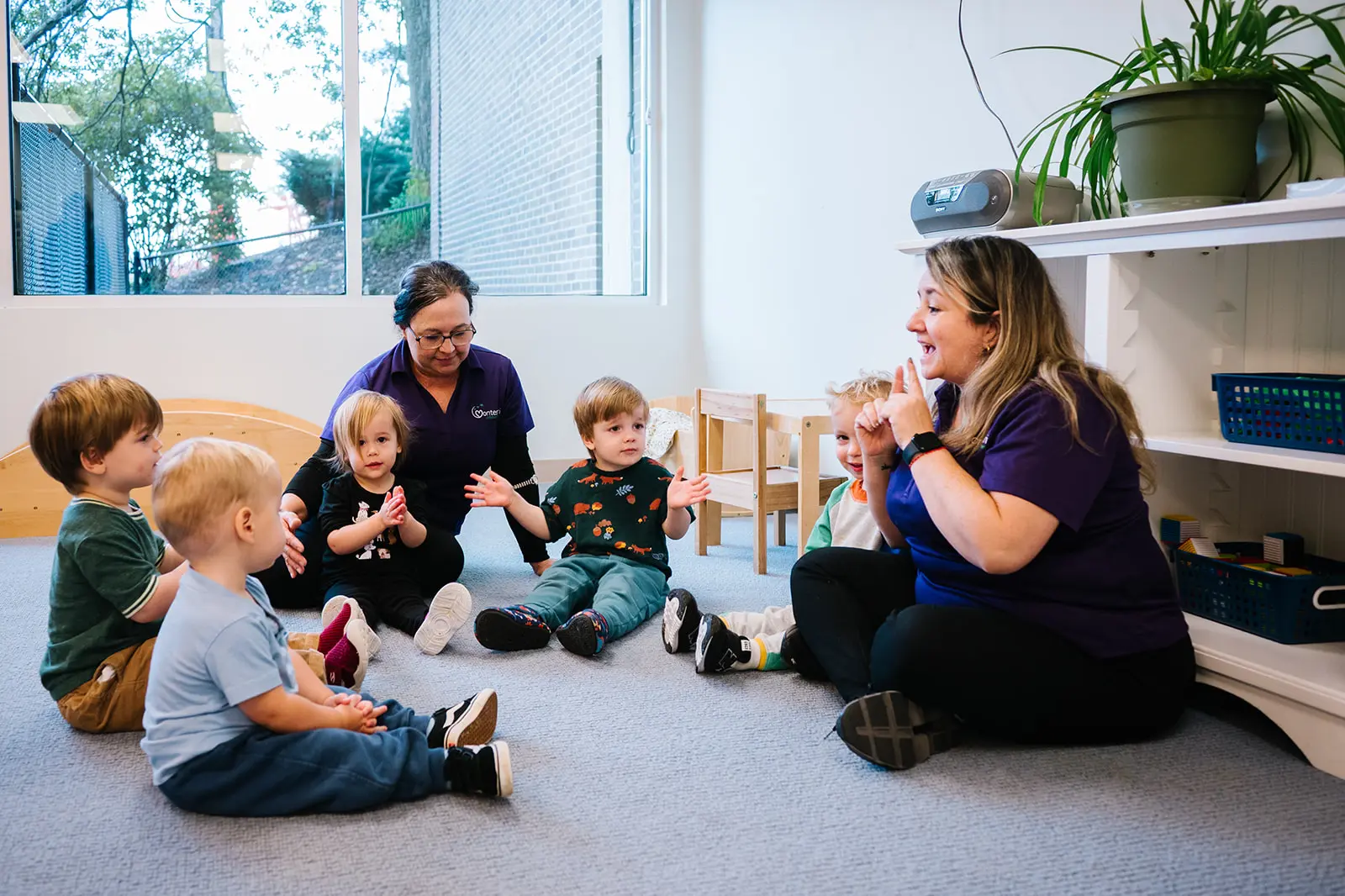
Music, movement, stories, calendar, and seasonal presentations from the head teacher occur in a joyous gathering of the community. A child may choose to continue working individually or may assist in setting the table to prepare the environment for lunch. The children are individually called at the end of the circle to wash and toilet in preparation for lunch through a song that helps develop listening skills, patience, and self-control (i.e., listening for the end sound of their name or a song that includes a color they are wearing).
11:15-12:15 PM - Outdoor Activity (EC MT) 11:15-12:00 (EC Meadow)
Children transition to outside shoes and outdoor gear and then enjoy unstructured outside play on the Montessori Children’s Center park, field, or trike path, supervised by staff. An assortment of large wooden blocks, scooters, trikes, balance beams, and balls is available, as well as a climbing structure with a climbing wall, steps, a slide, and a large tunnel. Parents supply helmets for each child for riding a trike.
12:00-12:30 PM - Lunch
Lunch is served family style. Children join together to say the Montessori Children’s Center special words of gratitude in unison. The children are encouraged to serve themselves independently. All use open cups and utensils. If the parent supplies their lunch, the child will assist in transferring their meal to a plate or bowl, even if it is pouch food, so the child can use a utensil. Any leftovers of parent-supplied food are sent home. After finishing, the child carries their items to the basin and washes their plate, bowl, and cup.
12:45-3:15 PM - Nap and Rest
EC children sleep in low cots with sheets and lovies provided from home. The bedding is sent home weekly to be washed on Fridays or whenever it is soiled. Cots are thoroughly cleaned weekly on Fridays. Cots are assigned and not shared, and are placed two feet apart from each other. Teachers assist children in falling asleep by rubbing or patting, if needed. They are never awakened by caregivers but are allowed to sleep as long as they need. As they awaken, the children assist with putting away their bedding in their cubby and may help with putting away the cots. Children who do not nap are required to rest one hour on their cot and then may choose quiet activities in the room. Once enough children awaken, they may go outside or to the Peace Room with one of the teachers.
1:45-3:15 PM - Activity
Children play on the Montessori Children’s Center park, terrace, or Peace Room, supervised by staff.
3:15-3:30 PM - Snack
Children enjoy a second nutritious snack.
3:30-5:00 PM - Self-Chosen Work
Children choose manipulative work. Outdoor activities may continue on the terrace. Group activities such as art projects, sound lotto, games, and reading stories may occur.
3:30-5:30 PM - Dismissal
Children are dismissed according to their family’s pick-up schedule. From 5:00 to 5:30, children participate in the end-of-day routine, helping to reset the environment and prepare the class for the next day. All children and families must exit the building by 5:30 pm.